 CastGhost
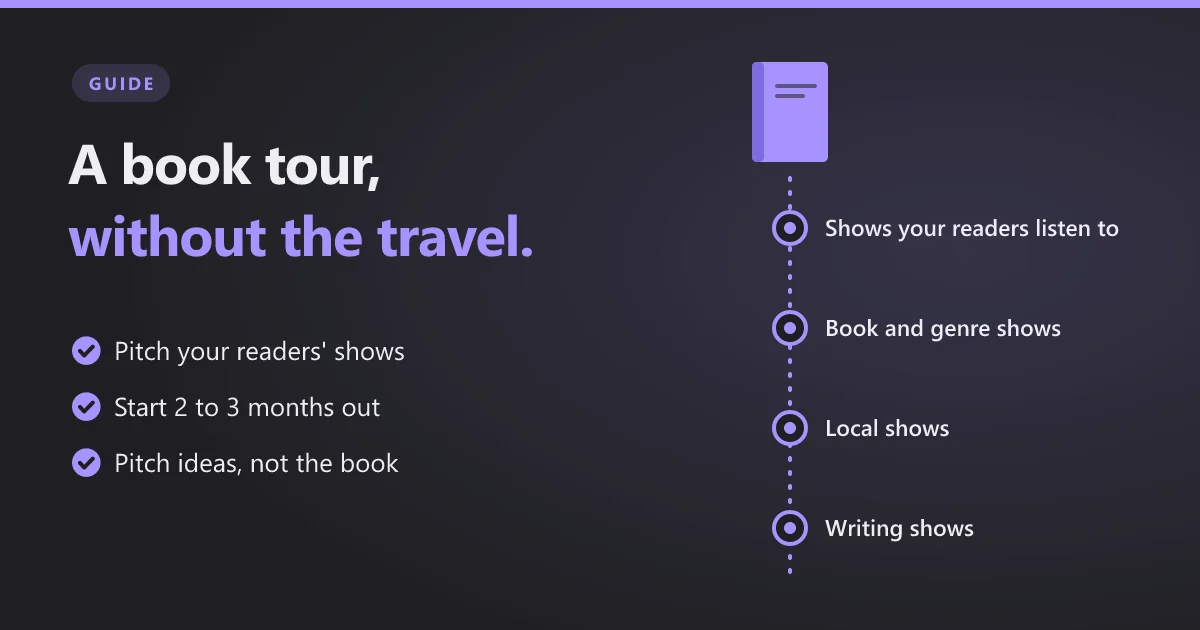
A podcast is one of the best places for a book that isn't a bestseller yet. A host gives you half an hour or more to talk through its ideas, with listeners who chose a show about that subject, and the episode keeps finding readers long after launch week. A run of appearances around a launch is called a podcast tour: a book tour, without the travel.
Here's how to plan one, especially if you're self-published and the promotion is up to you.
The short version
- Pitch the shows your readers listen to, not just shows about writing. Writing podcasts mostly reach other writers.
- Start two or three months before launch. Many shows record weeks before an episode airs.
- Pitch the ideas in the book, not the book. Hosts want a conversation. The book is why you're worth having one with.
- Keep going after launch week. A good episode sells books for months, and to every listener who hasn't heard of yours, it's new.
Which shows to pitch
Shows your readers listen to
Think about who your readers are when they aren't reading: what they do, what they worry about, what they care about. Those shows are where your tour should spend most of its time.
- Non-fiction: pitch shows about your book's subject. A book on burnout belongs on shows about work, health and leadership, not on book shows.
- Fiction: pitch the themes, the setting and the research behind the story. A crime novel set in a fishing town has something to say on shows about history, true crime and that part of the world.
Book and genre shows
Shows for readers of your genre (romance, fantasy, science fiction, thrillers) and book-club shows have smaller audiences, but every listener is a reader. Pitch the story behind the book and what readers of the genre will recognize.
Local shows
Your town or region's shows. A local author is a story in itself, and local listeners are the ones who walk into the local bookshop and ask for your book.
Writing and publishing shows
These are worth doing if your readers are writers, or for the story of how you published. But most of their listeners are other writers, so treat them as a bonus, not the tour.
When to start
Start pitching two or three months before launch. Many shows record weeks before an episode airs, and the shows with the longest waiting lists book guests well ahead of that. Aim for episodes that air in launch week and the weeks after it.
A simple plan:
| When | What to do |
|---|---|
| 10 to 12 weeks before launch | Set up a page for hosts and list the subjects your book covers |
| 8 to 10 weeks before | Pitch your first round of shows |
| 4 to 6 weeks before | Follow up, and pitch a second round |
| Launch week | Share each episode as it comes out |
| After launch | Keep pitching: the shows that missed your launch still want good guests |
Pitch the ideas, not the book
A pitch about "my new book" asks the host to run an advert. Pitch one story from the book instead: a case in it, a finding, or the experience that made you write it.
Instead of "I'd love to come on and talk about my new book on remote work", start with something in it: "Eleven of the fourteen remote teams I followed started to struggle in their third month, and one meeting turned most of them around." The book is what makes you credible, and the host will mention it anyway.
Offer the host a copy, too. Many like to read or skim a book before the conversation, and it shows you take their show seriously.
Before you record
- Have a page made for hosts, with a read-aloud introduction, a short bio, a headshot, your book cover and the one link you want listeners to have. More on why every guest needs one.
- Pick one call to action. Your website or newsletter usually beats a list of retailers: one address is easy to remember, and a newsletter keeps the reader for your next book.
- Sort out your sound. A modest setup is enough: here's the one I use.
For the conversation itself, see how to be a great podcast guest.
After the episode
- Add it to your website and your newsletter. Each appearance makes the next host's decision easier.
- Share it with one idea from the conversation, not just the link, and tag the host and the show.
- Ask the host who else might be a fit. Hosts know other hosts.
How CastGhost helps with a podcast tour
- Your pitches come from your book. You set up your profile from your website, your writing and the book itself, and every pitch is written for one show from that material, in your voice, with nothing invented.
- Each subject can be its own search. A book that covers leadership and parenting can pitch both as separate niches, each with its own shows and pitches. You start with one niche, adding credit unlocks a second, and you can ask for more.
- Only shows worth pitching. CastGhost checks every show's recent episodes for your subject, for guests and for whether it's still publishing, which matters because most podcasts have stopped.
- It costs little. Setting up and searching are free, and a pitch is $2, so a 20-show tour costs $40 in pitches. Credit never expires, so whatever you don't use waits for your next book.
See Pricing, or who else CastGhost is for.