 CastGhost
If you sell your expertise, the hardest part of winning a client is getting them to trust you before they've worked with you. A podcast does that better than almost anything else. A future client gets to know you ahead of time, hear how you think, in your own voice, for half an hour or more, and then decides to call.
The catch is time. You already have a full calendar, and pitching podcasts by hand can eat whole afternoons or cost a fortune to outsource. Here's how to fit it around client work: about an hour a week to pitch, plus time for the recordings you book.
The short version
- Pitch your clients' shows, not shows about your profession. Listeners there are the people who hire you.
- Talk through real problems your clients have, with stories, and check your profession's rules before you share any client detail.
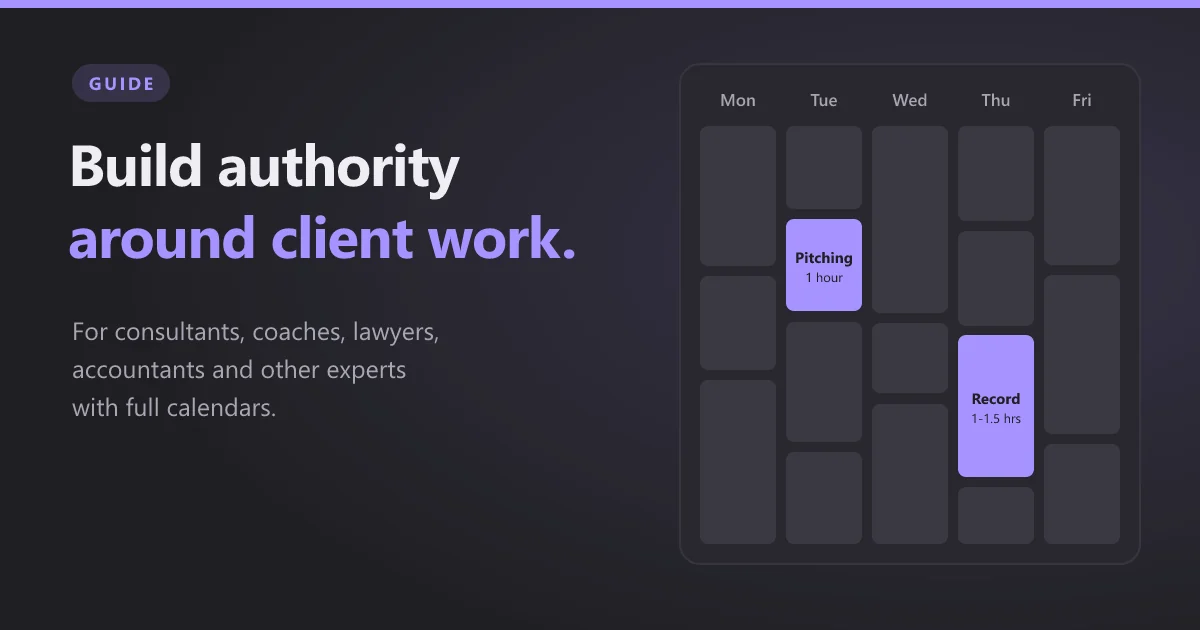
- Protect an hour a week to pitch a batch of shows, and an hour to an hour and a half for each recording on the weeks you have one. Or batch several recordings into the same day.
- Hand the pitching to someone else if you can. An assistant or a publicist can pitch for you, in the third person.
- Turn every episode into three or four more things: social media posts, a newsletter article, or a page on your site.
Why podcasts work for experts
- Trust before the first call. Someone who has heard you explain their problem for half an hour arrives at a first meeting half-sold.
- Referrals. A link to an episode is the easiest thing for a happy client to forward when someone asks who they'd recommend.
- Search. Show notes link to your site, and an episode with your name in it keeps turning up when people look you up.
- It lasts. An episode keeps working for months after the hour you spent recording it, which is part of why I'd never pay for it by the month.
Which shows to pitch
Your clients' shows
Start with the people who hire you, and find the shows they listen to for work. An accountant for restaurants belongs on shows for restaurant owners; an employment lawyer on shows for HR leaders and small business owners; a leadership coach on shows for new managers. Your clients' industry, their role and the problems they bring you are the best guide.
Local business shows
Most towns and regions have shows about local business. If your clients are local, a local show reaches exactly them, and local hosts love a local expert.
Shows about your profession
These are good for your standing among peers and for referrals from them, but their listeners are mostly people who do what you do. Treat them as a bonus, a growth lever or SEO play.
Smaller shows in exactly your niche are often better than big general ones, and more likely to say yes. Check they're still going, though, as most podcasts have stopped publishing.
What to talk about
- The problems your clients bring you, and how you think them through. Listeners want to recognize their own situation.
- Stories, told carefully. A story makes the point stick, but client confidentiality comes first. Change the details, combine cases, or ask permission. If your profession has rules on public statements or advertising, as many in law, finance and health do, check them before you record.
- A view someone might push back on. "Most small businesses overpay tax because of one decision in their first year" is a conversation. "We provide comprehensive tax services" is a brochure.
- One next step for listeners at the end, such as a guide on your site or a newsletter, rather than a hard sell. More on being the guest hosts want back.
Fit it around client work
- Block an hour a week to pitch. When the research is done for you, that's enough to review and send a batch of pitches and clear your follow-ups.
- Keep an hour to an hour and a half for each recording, on the weeks you have one. That covers your technical setup, the chat with the host before you start and the episode itself. Here's how I set up for a recording.
- Or batch your recordings. Book several appearances into the same day rather than scattering them across your week, and you're in recording mode once.
- Have your host kit ready once: an introduction a host can read out, a short bio, a headshot and one link, on a page made for hosts.
- Sort out your setup once. A modest setup sounds professional, and once it's sorted, getting ready for each recording is quick.
- Reuse every episode. Share it with one idea from the conversation, mention it in your newsletter, and add it to your site.
Let someone else pitch for you
If you have an assistant, a marketing person or a publicist, they can run your outreach. In CastGhost, choose the representative pitch voice, and pitches are written in the third person, signed with their name, while still being built from your own expertise and material. You just turn up and record.
How CastGhost saves the time
For a busy professional, the expensive part of podcast outreach is the research and show matching, not just the writing. CastGhost does it all:
- It finds the shows. A live search of Apple Podcasts, Spotify, YouTube and other directories, until it has ten that fit you. A batch takes a few minutes.
- It checks them. It reads each show's recent episodes for your subject, for guests and for whether it's still publishing.
- It finds the host, and checks the address accepts mail.
- It drafts the pitch from your own material, in your voice, with nothing invented. You review, edit and send from your own Gmail, or schedule it.
- It tells you when to follow up. A host who hasn't replied after a week turns up in Follow-ups, and one click drafts a short follow-up for you to review and send.
Setting up your profile and finding shows that fit you are free. A pitch is $2, so ten pitches cost $20, which for many professionals is less than a quarter of an hour of their time. See Pricing, or why CastGhost does more than ChatGPT or Claude would.